
Autonomous Monitoring System: A Houston Buyer's Guide (2026)
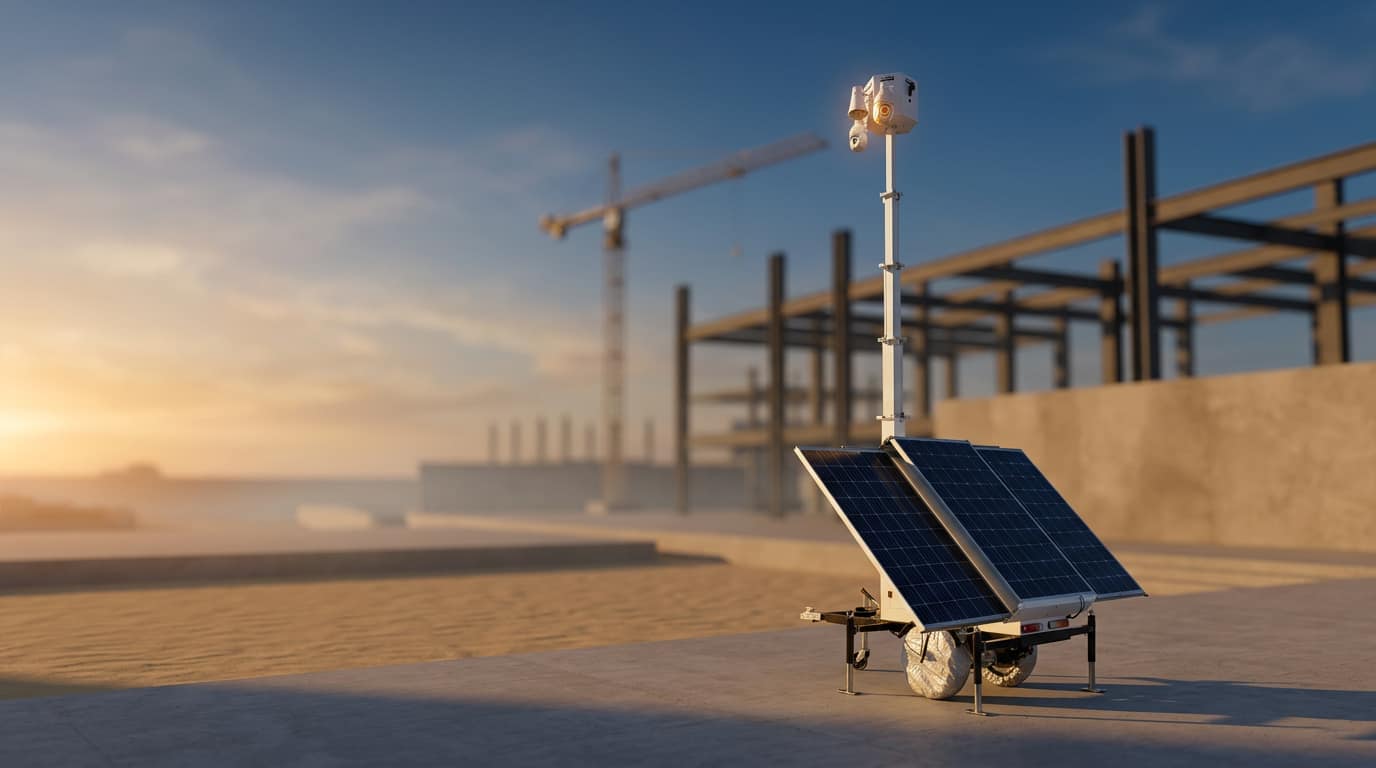
Autonomous monitoring system in Houston runs $2,400–$4,200 per trailer per month on a 30-day term, versus $28–$42 per hour for a single unarmed guard ($20,160–$30,240 a month at 24/7). Guardtress deploys across Harris, Fort Bend, and Montgomery counties in 24–72 hours, with solar power good for 5–7 days of no-sun autonomy and live talkdown inside 20 seconds of an alert.
What is autonomous monitoring system, exactly?
Autonomous monitoring system describes a self-contained, relocatable surveillance and deterrence platform: a towable mast with PTZ and fixed cameras, on-board edge AI, floodlights, a two-way speaker, cellular uplink, and a solar-plus-battery power plant. It replaces the assumption that protecting an unpowered, unfenced, or temporary site requires a human standing on it.
In the Houston metro, that matters because most sites needing protection have no utility power for weeks. A Guardtress unit arrives on a gooseneck, is leveled and aimed in 45–90 minutes, and is streaming to the monitoring desk the same afternoon — commonly on sites in 77029 (Cloverleaf), 77020 (Fifth Ward), 77504 (Pasadena).
- Mast height: 20–30 ft deployed, under 13'6" in transit for Texas DOT road legality
- Cameras: 4K fixed multi-sensor plus 25–33x optical PTZ with IR and thermal options
- Detection: edge AI person/vehicle classification that filters environmental nuisance alerts
- Power: 600–1,200W solar array, 5–7 days no-sun autonomy, optional LP generator backup
- Connectivity: dual-carrier LTE/5G with automatic failover; Starlink option for rural leases
- Deterrence: 110 dB speaker for live talkdown plus strobe and floodlight escalation
How much does autonomous monitoring system cost in Houston in 2026?
Pricing is monthly, not hourly. A single monitored unit runs $2,400–$4,200 per month depending on camera count, monitoring hours (dusk-to-dawn vs 24/7), and term length. Delivery, setup, and teardown inside Beltway 8 run $350–$650 each way; outer Harris, Fort Bend, Montgomery, and Galveston counties add $1.85–$2.40 per loaded mile.
Compare that to guard labor. Unarmed guards in Houston bill $28–$42 per hour in 2026 (Bureau of Labor Statistics wage data plus typical Texas agency burden). One post, 24/7, is $20,160–$30,240 a month — and one guard cannot watch four acres or produce court-usable video of the 2:40 a.m. entry.
- 1 trailer, dusk-to-dawn monitoring: $2,400–$2,900/mo
- 1 trailer, 24/7 monitoring with talkdown: $3,200–$4,200/mo
- Each additional unit on the same site: 10–15% volume discount
- Delivery/setup/teardown: $350–$650 per move inside Beltway 8
- Builder's risk documentation package formatted for broker and carrier review
- Break-even vs one 24/7 guard post: roughly week two of month one
How does autonomous monitoring system actually run night to night?
Alerts route to a live monitoring desk, not a siren nobody hears. Edge AI classifies the object; a human operator confirms intent in 8–20 seconds, issues a targeted talkdown ("the man in the gray hoodie by the conex — you are being recorded"), and escalates to Houston Police Department or Harris County Sheriff's Office with a live video-verified call that gets priority dispatch over an unverified alarm.
The goal is for intrusions to end at the talkdown — nobody is dispatched, nothing is lost, and the superintendent gets a clip in the morning report instead of a police report.
- 18:30 — auto arm at civil dusk; site-specific rules load
- Alert — edge AI classifies person vs vehicle vs animal; false alarms suppressed
- 0–20s — operator verifies and issues live talkdown with description
- 20–60s — strobe/floodlight escalation if subject remains
- 60s+ — video-verified call to HPD/HCSO with plate and direction of travel
- 07:00 — morning digest with clips, plate log, and arm/disarm audit trail
How do you choose the right autonomous monitoring system vendor?
Ask six questions before signing. Vendors who answer all six in writing are the ones who perform in month three, when the novelty is gone and the site is muddy.
Guardtress publishes answers to all six on the quote itself — including named response SLAs and the monitoring hours you are actually buying.
- Is monitoring live-operator or record-only? Get the staffed hours in writing.
- What is the verified alert-to-talkdown time? Under 20 seconds is the benchmark.
- Who owns the footage, and how long is retention? 30 days minimum, exportable.
- What is the in-term relocation cost when the site plan changes?
- What happens during a named storm — stow protocol, and who pays for the move?
- Can the vendor produce a monthly report package you can share with your insurer or broker?
How Guardtress deploys autonomous monitoring system across Houston and the Gulf Coast
We serve Houston, Sugar Land, The Woodlands, Pasadena, Baytown, Conroe, Katy, Galveston, League City, and Pearland. A site walk (in person or by drone/plan review) sizes coverage, and a quote lands the same day. Delivery follows in 24–72 hours.
"We had two copper hits in six weeks before the trailer. Zero in the eight months after — and our builder's risk carrier gave us a credit for the monitoring reports." — Project executive, Houston multifamily lease-up, 312 units
- Day 0 — site walk and coverage plan (approach paths, laydown, gate, easement)
- Day 0 — written quote with monitoring hours, response protocol, and relocation pricing
- Day 1–3 — delivery, leveling, aiming, and live-feed verification
- Night 1 — auto-arm at civil dusk, first morning digest at 07:00
- Monthly — incident report package formatted for your insurer
Ready to lock in your perimeter?
30-minute remote or on-site assessment. Same-day quote. Deployment in 24–72 hours across the Houston metro.
Get a same-day quote