Cookies on Guardtress
We use cookies to improve your experience and measure site performance. See our Privacy Policy for details.

Houston Retail Development Security Checklist: Protect Your Project from Day One
Ensure your construction site is secure, compliant, and protected against common threats. This checklist guides you through critical security measures.
The #1 most overlooked risk for retail development security is inadequate perimeter control combined with unmonitored access points. The #2 is failing to implement a proactive live monitoring strategy, leading to delayed incident response and increased losses.
Retail Development Security Checklist: Protecting Your Houston Project
Developing new retail spaces in Houston presents unique security challenges. From groundbreaking to grand opening, construction sites are prime targets for theft, vandalism, and unauthorized access. Guardtress offers this practical, scannable checklist to help site superintendents and operations managers establish robust security protocols, mitigating risks and ensuring project continuity.
Why a Dedicated Retail Development Security Plan?
Retail developments often house valuable materials, specialized equipment, and are typically located in high-traffic commercial areas, increasing their vulnerability. Proactive security measures not only protect assets but also prevent costly delays, maintain project timelines, and ensure compliance with safety regulations like OSHA 1926.
Perimeter Security
The first line of defense is a strong, well-maintained perimeter.
- [ ] Fencing: Install 8-foot-high chain-link fencing with barbed wire or razor wire topping (minimum 3 strands) around the entire construction site. Ensure posts are securely anchored every 10 feet.
- [ ] Gates: Utilize heavy-duty, lockable gates for all vehicle and pedestrian access points. Gates should be secured with hardened steel padlocks (e.g., ABUS Granit series or equivalent) and regularly inspected.
- [ ] Signage: Post clear, conspicuous 'No Trespassing,' 'Private Property,' and '24/7 Surveillance' signs every 50 feet along the perimeter, in English and Spanish. Include emergency contact numbers.
- [ ] Access Points: Minimize the number of entry/exit points to the absolute necessary, ideally one primary ingress/egress for vehicles and one for pedestrians during operational hours.
- [ ] Waste Management: Position dumpsters and waste containers away from the perimeter to prevent their use as climbing aids.
- [ ] Material Storage: Secure valuable materials (copper, tools, appliances) in locked containers or cages within the site, away from the perimeter.
Lighting & Cameras
Effective lighting and strategic camera placement are crucial deterrents and evidence-gathering tools.
- [ ] Illumination: Maintain a minimum of 10-15 lux (1-1.5 foot-candles) across the entire perimeter and critical storage areas during non-operational hours. Utilize motion-activated lighting in vulnerable spots.
- [ ] Camera Coverage: Install high-resolution (minimum 4K, preferably AI-enabled) surveillance cameras covering 100% of the perimeter, all entry/exit points, material storage areas, and any active construction zones.
- [ ] Camera Density: Aim for at least 2-3 cameras per acre for comprehensive coverage, with overlapping fields of view.
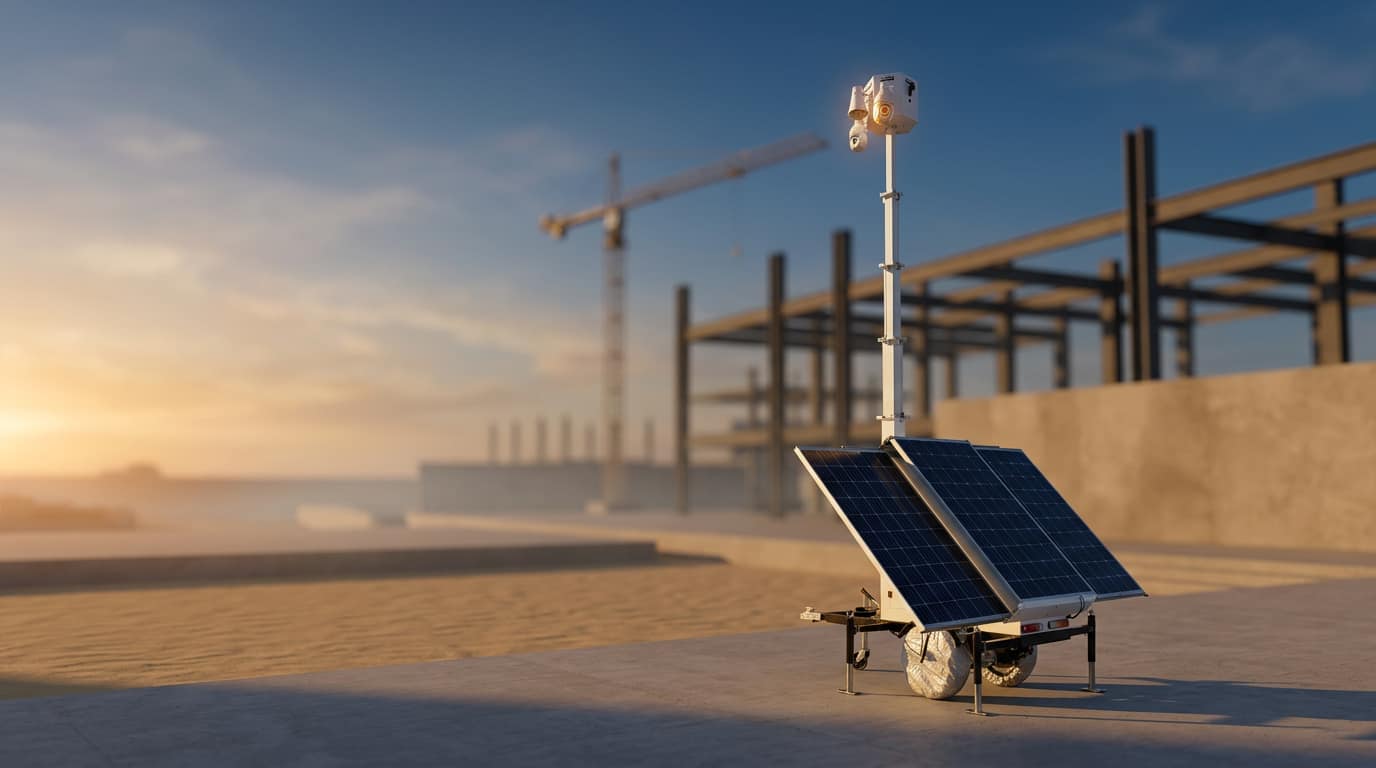
- [ ] Power Redundancy: Ensure all camera systems have uninterruptible power supplies (UPS) with a minimum of 4-hour backup, and consider solar power for remote camera towers.
- [ ] Network Connectivity: Utilize robust, secure network connections (e.g., cellular LTE/5G with failover) for remote monitoring.
- [ ] Visibility: Mount cameras high enough to prevent tampering, but low enough to capture clear facial and vehicle identification.
Access Control
Controlling who enters and exits the site is paramount to preventing theft and maintaining safety.
- [ ] Visitor Log: Implement a mandatory sign-in/sign-out log for all visitors, including delivery personnel and subcontractors. Require valid ID.
- [ ] ID Badges: Issue distinct, visible ID badges for all authorized personnel. Revoke access immediately upon termination.
- [ ] Vehicle Control: Implement vehicle manifests for all materials entering/leaving the site. Inspect outgoing vehicles for unauthorized materials.
- [ ] Gate Guards: Consider employing unarmed security guards at main gates during non-operational hours, especially for high-value projects. Guardtress can provide trained personnel.
- [ ] Key Management: Maintain a strict key control system for all locks, with regular audits and immediate rekeying if keys are lost or personnel change.
Documentation & Insurance
Proper documentation and insurance are critical for risk management and recovery.
- [ ] Security Plan: Develop a written, detailed security plan, including emergency contacts, incident response protocols, and designated security personnel. Review quarterly.
- [ ] OSHA Compliance: Ensure all security measures align with OSHA 1926 standards for construction safety, particularly regarding fall protection, hazardous materials, and site access.
- [ ] Insurance Review: Consult with your insurance provider (e.g., builders' risk, general liability) to ensure your policy adequately covers theft, vandalism, and property damage on construction sites. Review exclusions.
- [ ] Incident Reporting: Establish a clear protocol for reporting all security incidents, no matter how minor, to site management, security, and (if applicable) local law enforcement (Houston Police Department).
- [ ] NICB Reporting: Understand the reporting requirements for the National Insurance Crime Bureau (NICB) for stolen vehicles and heavy equipment.
- [ ] Texas DPS Compliance: Ensure any security personnel or systems comply with Texas Department of Public Safety (DPS) Private Security Bureau regulations.
Live Monitoring & Response
Passive security is insufficient. Proactive monitoring and rapid response are key to incident mitigation.
- [ ] 24/7 Live Monitoring: Utilize professional, off-site live monitoring services for all surveillance cameras, especially during non-operational hours. Guardtress provides this specialized service.
- [ ] Audio Deterrents: Integrate two-way audio talk-down capabilities with your camera system, allowing monitoring agents to issue verbal warnings to intruders.
- [ ] Police Dispatch: Establish direct lines of communication and clear protocols for dispatching local law enforcement (Houston Police Department) when an intrusion is detected.
- [ ] Response Time Targets: Aim for monitoring agents to detect and initiate an audio warning within 30 seconds of an intrusion, and dispatch law enforcement within 2 minutes if the threat persists.
- [ ] Keyholder Notification: Develop a clear escalation matrix for notifying site superintendents, project managers, and other key personnel during an incident.
- [ ] Post-Incident Review: Conduct a thorough review after every security incident to identify vulnerabilities and implement corrective actions.
By diligently implementing these checklist items, Houston retail development projects can significantly reduce their risk profile, protect valuable assets, and maintain project schedules. Guardtress is your expert partner in securing your investments from groundbreaking to completion.