
Two-Way Talkdown Protocols on a Monitored Security Trailer
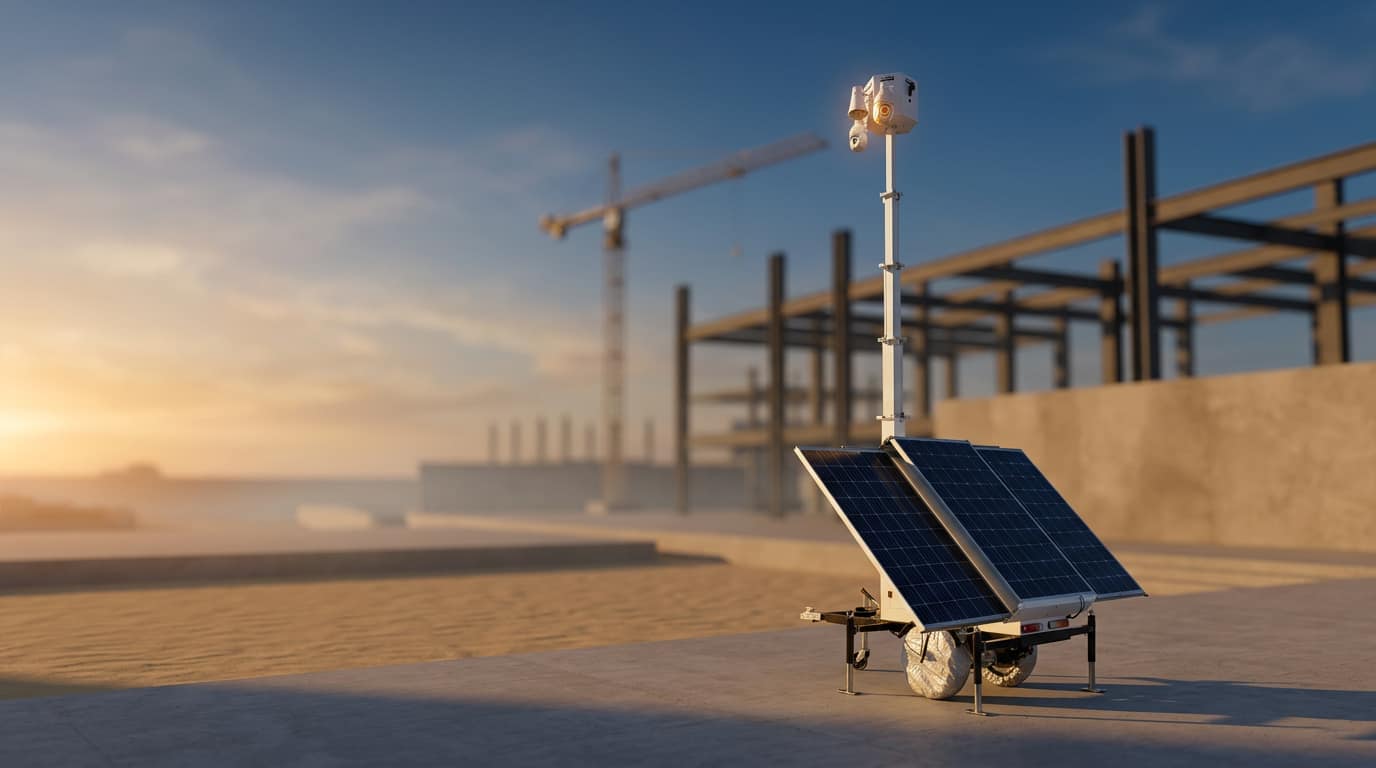
Two-way audio talkdown is the deterrent step that converts a monitored security trailer from 'evidence collector' into 'active response.' The Guardtress talkdown protocol — trigger conditions, script tiers, escalation, and de-escalation — determines whether the audio actually deters or just creates noise complaints.
What talkdown actually is
A monitored security trailer with two-way audio lets a live operator broadcast a verbal warning to an intruder through on-site speakers. Modern systems reach 95 dB at 100 feet — enough to be clearly heard across a typical jobsite.
The specific voice broadcasting is often the difference between deterrence and completed theft. Recorded loops don't work; live voice does.
- Talkdown speaker output: 95 dB @ 100 ft
- Talkdown trigger types: approach, tampering, tripwire
- Live voice vs recorded: live wins consistently
- Effective range: entire typical jobsite from single trailer
The trigger tier logic
Tier 1 (approach): unknown person crosses a defined perimeter zone during the monitored window. Fires a low-friction warning: 'This site is under 24-hour video monitoring. If you have business here, please contact the number posted at the ingress.'
Tier 2 (persistence): subject remains after Tier 1 or approaches a high-value zone. Escalated warning that references specific behavior and states HPD will be dispatched.
Tier 3 (active intrusion): forced entry, tool activity, or approach to a target asset. HPD dispatched immediately, talkdown continues with direct address.
De-escalation and legitimate visitors
Talkdown protocol must include de-escalation. Legitimate late-night visitors (owner, subcontractor with authorization, HPD on unrelated patrol) get identified and cleared inside 60 seconds via the after-hours contact tree.
A monitoring operator who talks down a legitimate visitor without de-escalation damages the client relationship. Training and script matter as much as the audio hardware.
- Every talkdown includes clear de-escalation path
- After-hours contact tree used inside 60 sec
- Operator training is as critical as hardware
- Log every legitimate false-positive for aim tuning
Neighbor considerations
Talkdown at 95 dB carries beyond the site perimeter. For sites adjacent to residential, the aim of the speaker matters — direct it into the site, not at the neighboring property.
Guardtress deployments include a neighbor-notification letter for sites adjacent to residential, sent before first talkdown. This prevents 'noise complaint' calls to HPD.
How fast can Guardtress deploy this in Houston?
Standard Guardtress deployments across the Houston metro land in 24–72 hours from signed quote to live monitoring. A single solar-powered mobile security trailer covers roughly 1.5–2 acres of open ground, carries 5–7 days of no-sun autonomy, and runs on bonded cellular so it needs no site power, no trenching, and no permanent mounting. Units relocate with a standard pintle hitch as the work front moves — a real advantage on phased Houston builds where the exposure point changes every few weeks.
Every unit ships with license plate recognition (LPR), analytic tripwires tuned to human and vehicle shapes, and two-way talkdown from a live U.S.-based monitoring center. Verified events escalate to the Houston Police Department or the Harris County Sheriff's Office as a confirmed crime in progress, which moves the call up the priority queue instead of into the false-alarm pile. Site plans, camera angles, and escalation contacts are set during a 30-minute assessment before the trailer leaves the yard.
- Assessment to live monitoring: 24–72 hours
- Coverage per unit: 1.5–2 acres, 360° with LPR at entry
- Power: solar with 5–7 days no-sun autonomy, no site power required
- Escalation: verified talkdown, then HPD / Harris County Sheriff dispatch
- Service area: Houston, Sugar Land, The Woodlands, Pasadena, Baytown, Conroe, Katy, Galveston, League City, Pearland
What does this cost compared with posting guards?
Houston contract guards run roughly $28–$42 per hour loaded, so a single unarmed guard on a 12-hour night shift costs about $10,000–$15,000 per month — for one set of eyes that can only be in one place, takes breaks, and turns over often. A monitored Guardtress trailer covers the same perimeter continuously at a fraction of that, and the spend moves from a headcount line to a predictable OPEX line you can hold to the schedule.
The math usually turns on two numbers: what a single loss event costs you in materials plus schedule slip, and whether your carrier offers any credit for a written 24/7 monitoring plan — a question worth asking your broker directly. Full site-by-site pricing is in our construction site security cost guide, and the head-to-head breakdown is at Guardtress vs. security guards.
- Houston guard rate: $28–$42/hour loaded
- One 12-hour guard shift: $10,000–$15,000/month
- Monitored trailer: fixed monthly OPEX, no overtime or turnover
- Builder's risk documentation: written monitoring plan formatted for broker review
Ready to lock in your perimeter?
30-minute remote or on-site assessment. Same-day quote. Deployment in 24–72 hours across the Houston metro.
Get a same-day quote