
Oil and Gas Lease Site Security in Texas — Field-Deployed Solutions
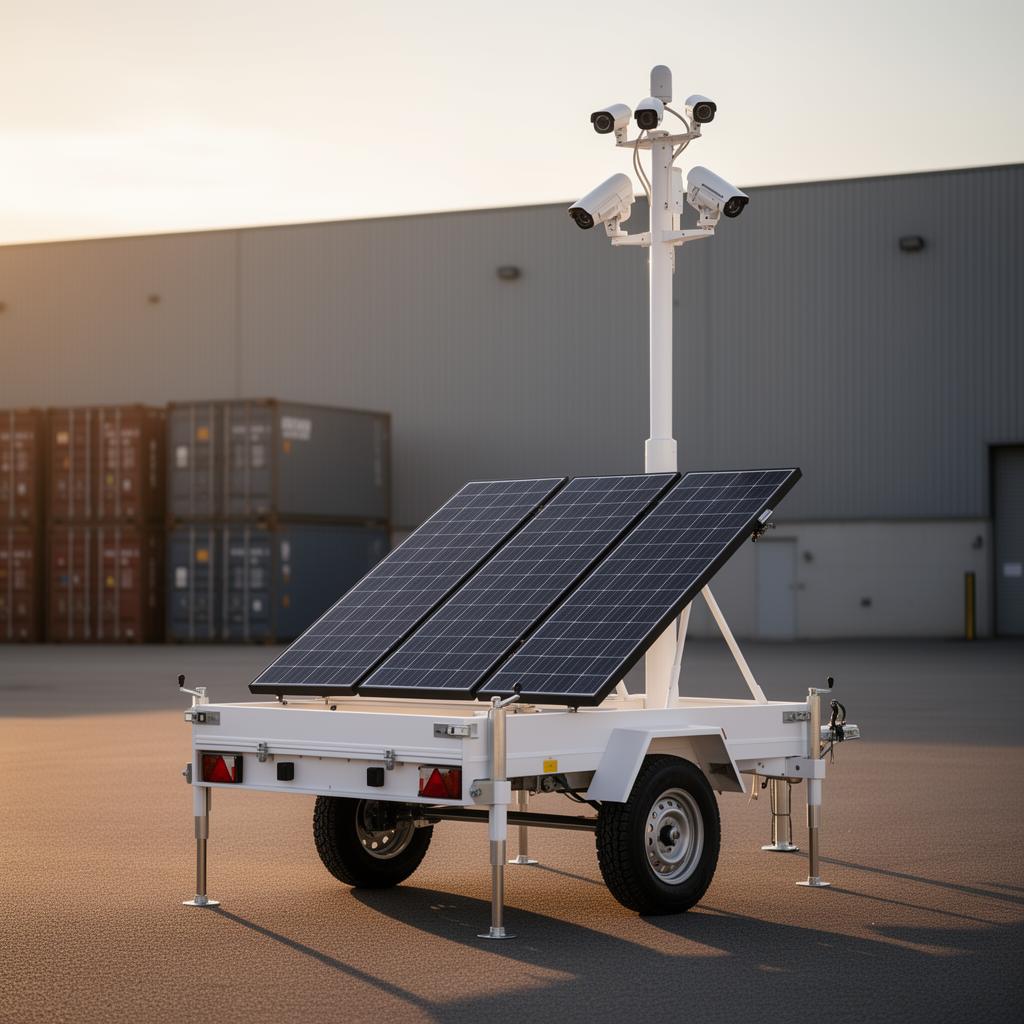
Oil and gas lease sites across the Permian, Eagle Ford, and Gulf Coast face copper theft on wellhead wiring, diesel theft on generators, and vagrant liability on remote pads. Guardtress deploys monitored trailers with Starlink satellite failover to lease sites that have no cellular and no grid power. Deployments cover pad security, saltwater disposal sites, and midstream compression stations.
The specific threat profile
Wellhead copper: control wiring and transmission runs are exposed and unattended. Loss per event: $4k–$40k in wire + $8k–$60k in production downtime.
Diesel: generators and pumping units carry 500–2,000 gallons on-site. Loss per event: 200–800 gallons + potential injector damage on top-off.
Vagrant/vandalism: remote pads become encampment or shooting-range targets. Liability and cleanup exposure is material.
Pipeline right-of-way: linear exposure, no natural perimeter, hard to monitor with fixed infrastructure.
Why standard trailers won't work
Oil and gas lease sites are frequently off cellular grid and off electrical grid. Standard monitored trailers assume both.
Guardtress lease-site trailers ship with Starlink satellite as primary connectivity, expanded solar arrays for extended off-grid runtime, and thermal cameras for total-darkness perimeter.
- Starlink primary, cellular secondary where available
- Expanded solar (2,400W) + battery (30 kWh)
- Thermal cameras for total-darkness perimeter
- Talkdown speakers rated for 200+ ft reach
Deployment on active well pads vs shut-in
Active well pads with crew presence during daylight need overnight-only monitored posture with immediate dispatch protocol.
Shut-in or between-frac pads with no crew need 24/7 monitored posture with a defined visitor manifest for any authorized service company access.
Coordination with operator field ops and law enforcement
Guardtress lease-site deployments coordinate with the operator's field ops for real-time visibility of monitored events on operator dashboards.
For remote pads, coordination with the sheriff's office of the specific Texas county (not HPD) is the correct law-enforcement path. Guardtress handles pre-deployment coordination.
- Real-time operator dashboard integration
- County sheriff coordination pre-deployment
- TXOGA best-practice alignment
- Documented response for TRRC and operator audits
How fast can Guardtress deploy this in Houston?
Standard Guardtress deployments across the Houston metro land in 24–72 hours from signed quote to live monitoring. A single solar-powered mobile security trailer covers roughly 1.5–2 acres of open ground, carries 5–7 days of no-sun autonomy, and runs on bonded cellular so it needs no site power, no trenching, and no permanent mounting. Units relocate with a standard pintle hitch as the work front moves — a real advantage on phased Houston builds where the exposure point changes every few weeks.
Every unit ships with license plate recognition (LPR), analytic tripwires tuned to human and vehicle shapes, and two-way talkdown from a live U.S.-based monitoring center. Verified events escalate to the Houston Police Department or the Harris County Sheriff's Office as a confirmed crime in progress, which moves the call up the priority queue instead of into the false-alarm pile. Site plans, camera angles, and escalation contacts are set during a 30-minute assessment before the trailer leaves the yard.
- Assessment to live monitoring: 24–72 hours
- Coverage per unit: 1.5–2 acres, 360° with LPR at entry
- Power: solar with 5–7 days no-sun autonomy, no site power required
- Escalation: verified talkdown, then HPD / Harris County Sheriff dispatch
- Service area: Houston, Sugar Land, The Woodlands, Pasadena, Baytown, Conroe, Katy, Galveston, League City, Pearland
What does this cost compared with posting guards?
Houston contract guards run roughly $28–$42 per hour loaded, so a single unarmed guard on a 12-hour night shift costs about $10,000–$15,000 per month — for one set of eyes that can only be in one place, takes breaks, and turns over often. A monitored Guardtress trailer covers the same perimeter continuously at a fraction of that, and the spend moves from a headcount line to a predictable OPEX line you can hold to the schedule.
The math usually turns on two numbers: what a single loss event costs you in materials plus schedule slip, and whether your carrier offers any credit for a written 24/7 monitoring plan — a question worth asking your broker directly. Full site-by-site pricing is in our construction site security cost guide, and the head-to-head breakdown is at Guardtress vs. security guards.
- Houston guard rate: $28–$42/hour loaded
- One 12-hour guard shift: $10,000–$15,000/month
- Monitored trailer: fixed monthly OPEX, no overtime or turnover
- Builder's risk documentation: written monitoring plan formatted for broker review
Ready to lock in your perimeter?
30-minute remote or on-site assessment. Same-day quote. Deployment in 24–72 hours across the Houston metro.
Get a same-day quote