
Jobsite Theft Statistics in Houston (2026 Data)
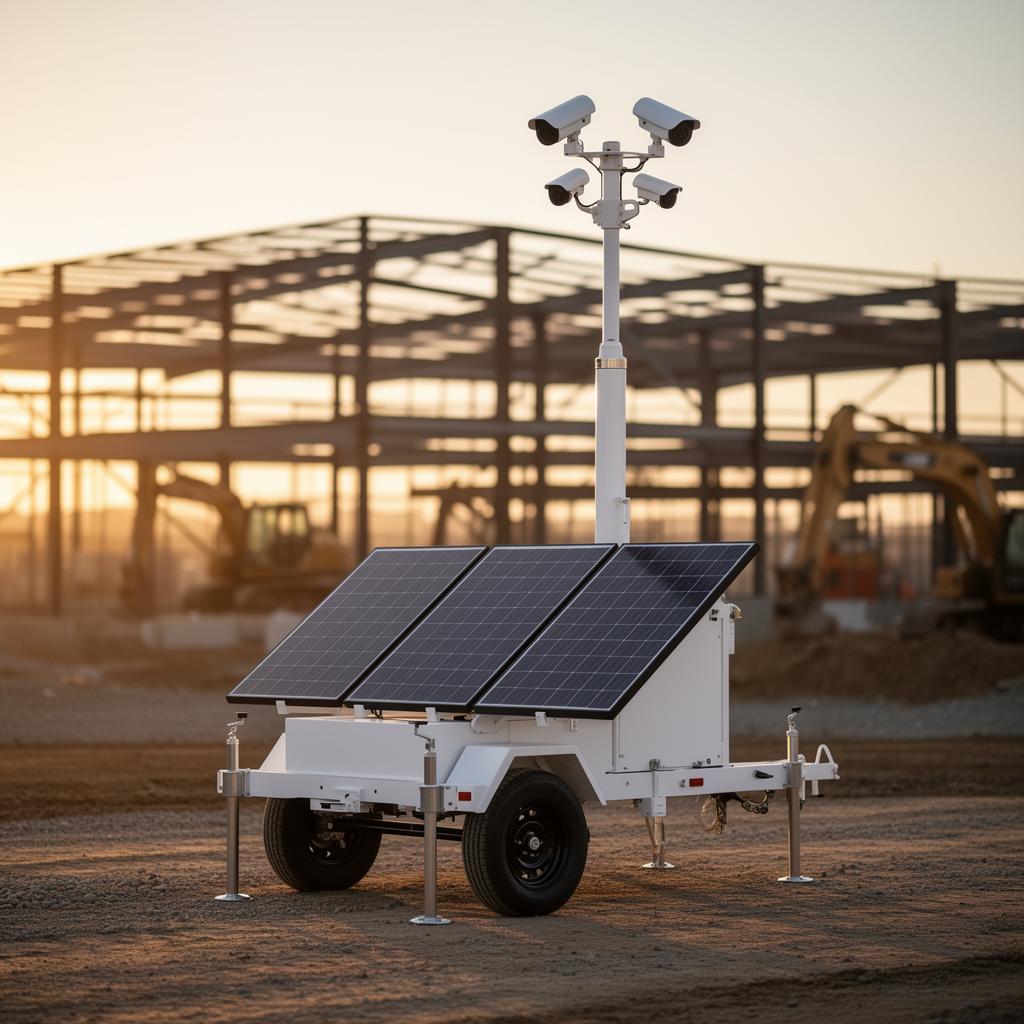
Jobsite theft in the Houston metro costs contractors dearly every year, per National Equipment Register (NER) and FBI UCR data. Only 21% of stolen equipment is ever recovered (NICB), most breaches happen overnight, and copper-driven losses continue to climb. A monitored mobile security trailer is designed to deter intrusion events at the perimeter and document everything that follows.
How much is Houston jobsite theft actually costing contractors?
The National Equipment Register (NER) estimates U.S. construction equipment theft at $300M–$1B annually, and the FBI's Uniform Crime Reporting program records tens of thousands of construction-related larcenies each year. Applied to the Houston metro's 2025 build volume — roughly 8.4% of Texas non-residential permits per the Texas Comptroller — jobsite theft here plausibly lands in the hundreds of millions of dollars per year, not counting schedule delays.
The insurance side is worse than the sticker price. NICB reports only 21% of stolen construction equipment is recovered, and the average claim now includes 2–4 weeks of schedule slip that builder's risk does not reimburse.
When do Houston jobsite breaches actually happen?
Most intrusion events happen between 10pm and 5am, with a smaller peak between 12pm and 2pm on weekends when crews are gone but the site looks 'open.'
Sunday morning is the single highest-risk shift on a Houston site. Copper thieves specifically target the 48 hours after MEP rough-in, when the wire is on-site but not yet in-wall.
- 10pm–5am: peak intrusion window
- Weekend middays: secondary peak
- Post-storm 48-hour window: elevated risk (perimeter fencing down)
- Everything else: the long tail
What's actually being stolen on Houston jobsites?
Copper is the runaway leader. Copper commodity prices closed 2025 north of $4.30/lb, and Houston MEP jobs typically carry $40k–$180k of exposed copper during rough-in. Small tools (impact drivers, saws, generators) are second. Skid steers, mini-excavators, and generators round out the top five.
- Copper wire, plumbing, and grounding: rising year over year
- Small tools ($200–$3,000 each): the most frequent claims
- Skid steers and mini-excavators: the largest share of dollar value
- Diesel and fuel theft from generators/gensets: persistent
- Materials (rebar, lumber packages, HVAC condensers): chronic
How much does a monitored perimeter actually reduce loss?
The goal of a fully-monitored mobile security trailer with LPR, two-way talkdown, and verified Houston Police Department dispatch is simple: deter the event at the perimeter and document everything that follows. The remaining events are typically opportunistic daytime tool grabs during active crew hours.
Some insurance carriers writing Texas builder's risk offer premium credits when a written security plan includes 24/7 monitored surveillance — see our post on builder's risk security discounts for the documentation carriers typically ask for, and confirm with your broker.
What Houston contractors should do this quarter
Three moves, in order: (1) pull your last 12 months of loss data by cost code, (2) map breach times against your monitoring gap, (3) get a written 24/7 monitoring quote before the next MEP rough-in. Full site-specific pricing is in our construction site security cost guide.
How fast can Guardtress deploy this in Houston?
Standard Guardtress deployments across the Houston metro land in 24–72 hours from signed quote to live monitoring. A single solar-powered mobile security trailer covers roughly 1.5–2 acres of open ground, carries 5–7 days of no-sun autonomy, and runs on bonded cellular so it needs no site power, no trenching, and no permanent mounting. Units relocate with a standard pintle hitch as the work front moves — a real advantage on phased Houston builds where the exposure point changes every few weeks.
Every unit ships with license plate recognition (LPR), analytic tripwires tuned to human and vehicle shapes, and two-way talkdown from a live U.S.-based monitoring center. Verified events escalate to the Houston Police Department or the Harris County Sheriff's Office as a confirmed crime in progress, which moves the call up the priority queue instead of into the false-alarm pile. Site plans, camera angles, and escalation contacts are set during a 30-minute assessment before the trailer leaves the yard.
- Assessment to live monitoring: 24–72 hours
- Coverage per unit: 1.5–2 acres, 360° with LPR at entry
- Power: solar with 5–7 days no-sun autonomy, no site power required
- Escalation: verified talkdown, then HPD / Harris County Sheriff dispatch
- Service area: Houston, Sugar Land, The Woodlands, Pasadena, Baytown, Conroe, Katy, Galveston, League City, Pearland
What does this cost compared with posting guards?
Houston contract guards run roughly $28–$42 per hour loaded, so a single unarmed guard on a 12-hour night shift costs about $10,000–$15,000 per month — for one set of eyes that can only be in one place, takes breaks, and turns over often. A monitored Guardtress trailer covers the same perimeter continuously at a fraction of that, and the spend moves from a headcount line to a predictable OPEX line you can hold to the schedule.
The math usually turns on two numbers: what a single loss event costs you in materials plus schedule slip, and whether your carrier offers any credit for a written 24/7 monitoring plan — a question worth asking your broker directly. Full site-by-site pricing is in our construction site security cost guide, and the head-to-head breakdown is at Guardtress vs. security guards.
- Houston guard rate: $28–$42/hour loaded
- One 12-hour guard shift: $10,000–$15,000/month
- Monitored trailer: fixed monthly OPEX, no overtime or turnover
- Builder's risk documentation: written monitoring plan formatted for broker review
Ready to lock in your perimeter?
30-minute remote or on-site assessment. Same-day quote. Deployment in 24–72 hours across the Houston metro.
Get a same-day quote