
Copper Theft Hotspots in Houston (2026 Map)
Copper theft in Houston continues to climb, concentrated in five geographic corridors: East End (77020, 77023), North Loop industrial (77009, 77022), Sharpstown/Southwest (77036, 77072), Northside near I-45 (77026), and the Ship Channel industrial belt. MEP rough-in windows on multifamily and industrial builds in these ZIPs are the single highest-risk exposure. East End (77020, 77023), North Loop industrial (77009, 77022), Sharpstown/Southwest (77036, 77072), Northside near I-45 (77026), and the Ship Channel industrial belt. MEP rough-in windows on multifamily and industrial builds in these ZIPs are the single highest-risk exposure.
Why is copper theft accelerating in 2026?
Two factors: (1) copper commodity price closed 2025 north of $4.30/lb on LME futures — the highest sustained level since 2011 — and (2) Texas scrap-yard reporting requirements are enforced unevenly across Harris County. Both make Houston a soft target for organized copper crews working across multiple metros.
The five Houston hotspot corridors
The checklist is built from HPD incident patterns and carrier documentation requirements. Five geographic clusters account for a disproportionate share of Houston-metro copper theft claims:
- East End (77020, 77023): active multifamily and adaptive reuse, minimal patrol density
- North Loop industrial (77009, 77022): scrap-yard proximity, freeway egress
- Sharpstown / Southwest (77036, 77072): older commercial stock in renovation
- Northside / I-45 corridor (77026): distressed commercial + jobsite mix
- Ship Channel industrial belt (77012, 77029): high-value MEP and grounding copper
When the hits happen
Copper crews target the 48-hour window after MEP rough-in — wire is on-site but not in-wall, and the crew has left for the weekend. Sunday morning between 2am and 5am is the peak. Post-storm windows (perimeter fencing compromised) are the second peak.
The five-step copper prevention playbook
Prevention beats recovery — NICB reports only 21% of stolen construction materials are recovered.
- Schedule MEP rough-in on Monday–Wednesday, not Friday
- Lock all uninstalled copper in a conex until walls are ready — never leave on open pallet
- Deploy a monitored perimeter with LPR on every ingress lane 72 hours before rough-in
- Post signage naming the monitoring service and dispatch — copper crews avoid documented perimeters
- File monthly incident reports with the GC and carrier, even if zero events
Working with HPD's Metal Theft Unit
The Houston Police Department Metal Theft Unit maintains an active database of copper resale patterns and scrap-yard investigations. When a Guardtress-monitored site captures a plate on an intrusion event, we file directly with the Metal Theft Unit — turning a single incident into a network case. Detailed workflow in our copper theft prevention answer.
How fast can Guardtress deploy this in Houston?
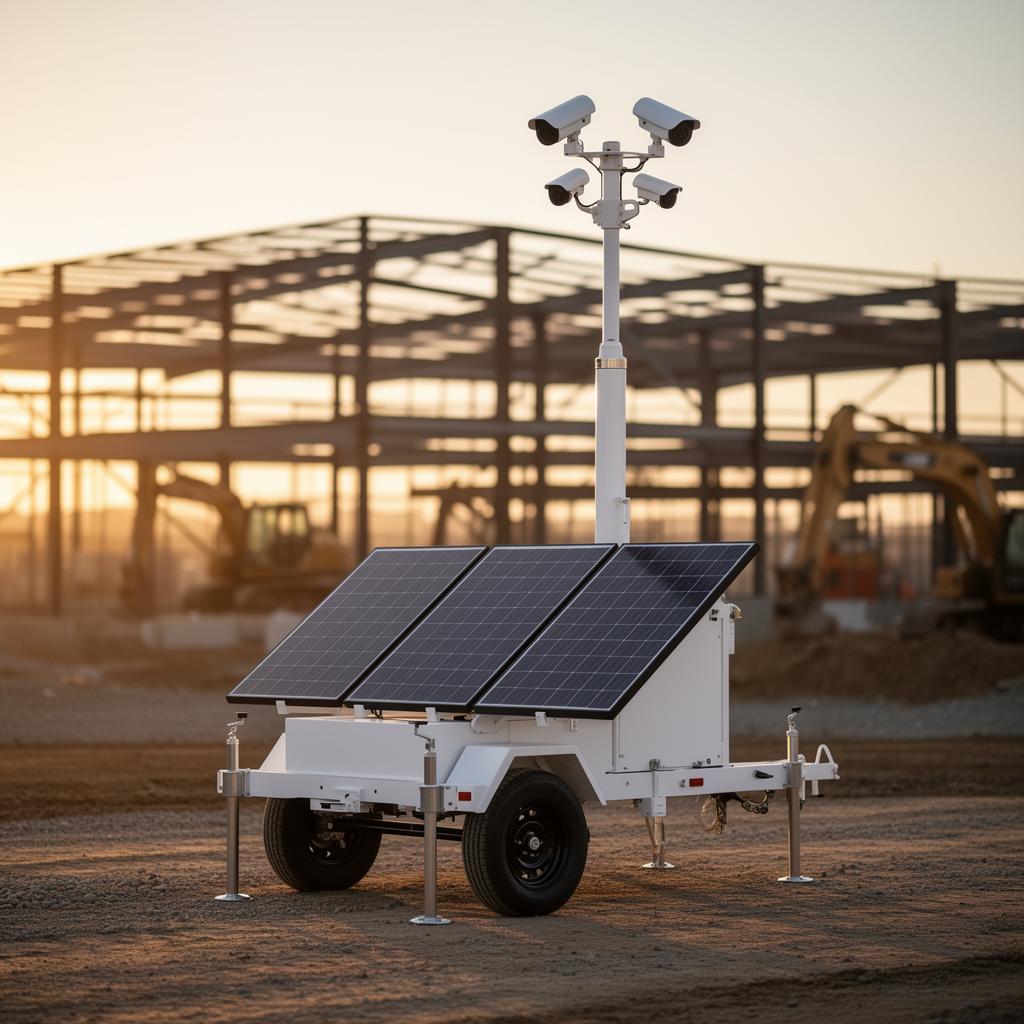
Standard Guardtress deployments across the Houston metro land in 24–72 hours from signed quote to live monitoring. A single solar-powered mobile security trailer covers roughly 1.5–2 acres of open ground, carries 5–7 days of no-sun autonomy, and runs on bonded cellular so it needs no site power, no trenching, and no permanent mounting. Units relocate with a standard pintle hitch as the work front moves — a real advantage on phased Houston builds where the exposure point changes every few weeks.
Every unit ships with license plate recognition (LPR), analytic tripwires tuned to human and vehicle shapes, and two-way talkdown from a live U.S.-based monitoring center. Verified events escalate to the Houston Police Department or the Harris County Sheriff's Office as a confirmed crime in progress, which moves the call up the priority queue instead of into the false-alarm pile. Site plans, camera angles, and escalation contacts are set during a 30-minute assessment before the trailer leaves the yard.
- Assessment to live monitoring: 24–72 hours
- Coverage per unit: 1.5–2 acres, 360° with LPR at entry
- Power: solar with 5–7 days no-sun autonomy, no site power required
- Escalation: verified talkdown, then HPD / Harris County Sheriff dispatch
- Service area: Houston, Sugar Land, The Woodlands, Pasadena, Baytown, Conroe, Katy, Galveston, League City, Pearland
What does this cost compared with posting guards?
Houston contract guards run roughly $28–$42 per hour loaded, so a single unarmed guard on a 12-hour night shift costs about $10,000–$15,000 per month — for one set of eyes that can only be in one place, takes breaks, and turns over often. A monitored Guardtress trailer covers the same perimeter continuously at a fraction of that, and the spend moves from a headcount line to a predictable OPEX line you can hold to the schedule.
The math usually turns on two numbers: what a single loss event costs you in materials plus schedule slip, and whether your carrier offers any credit for a written 24/7 monitoring plan — a question worth asking your broker directly. Full site-by-site pricing is in our construction site security cost guide, and the head-to-head breakdown is at Guardtress vs. security guards.
- Houston guard rate: $28–$42/hour loaded
- One 12-hour guard shift: $10,000–$15,000/month
- Monitored trailer: fixed monthly OPEX, no overtime or turnover
- Builder's risk documentation: written monitoring plan formatted for broker review
Ready to lock in your perimeter?
30-minute remote or on-site assessment. Same-day quote. Deployment in 24–72 hours across the Houston metro.
Get a same-day quote